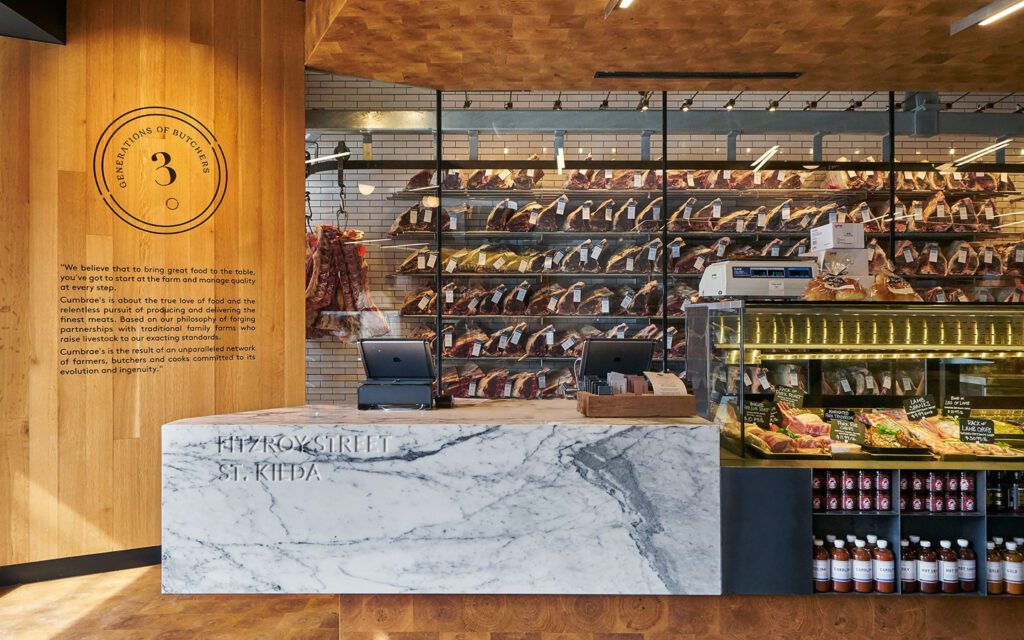
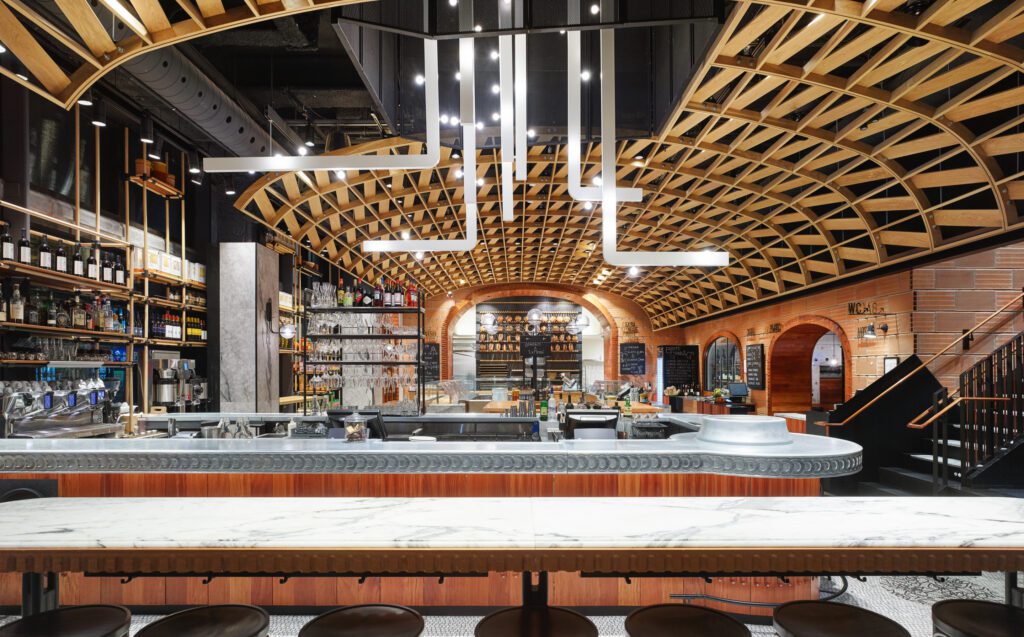
The warm woven wood ceiling above the central bar gathers and organizes the diverse market typologies under one over-arching idea. The gentle swells and waves in the construction of the ceiling itself alludes to the nearby lake while mitigating the base building challenges of low ceilings and HVAC. Vistas and horizons within the built market draw the user through the experience. Low and semi-constructed market stall types allow for sight lines through the vast space. This confluence of market, performance, drinking, and the connection to the Well’s vibrant programme in the ‘spine’ inform the overall aesthetic. The dynamic plan layout evolves as tenants turn over and new market offerings are added, ensuring a lively, ever-changing environment where visitors can explore, dine, and engage in a unique culinary journey. Designing different Market Stall types to accommodate these changes in addition to the diverse range of tenant types, is meant to create an intoxicating experience. The future of food retail informs the future of market design: A hybrid which marries food market with food halls, restaurant, and curated spaces to eat, drink, and shop.

Wellington Market
Future of the Food Market
Wellington Market is an expansive 70,000 square foot hybrid food market located in the mixed-use development of The Well in downtown Toronto. With a central bar, the entire market space is fully licensed and consists of multiple small kiosks leased to different vendors which include quick service restaurants with common dining area, casual restaurants, food and service retail shops, and the 5,000 sq. ft. Wellington Event Venue for community engagement, culinary workshops, and corporate meetings. With kiosks ranging from floral boutiques and bars to games cafés and international kitchens, Wellington Market delivers an expansive theatre of food, layered in sensory richness and architectural storytelling.


Whether it be built or natural, soft sand or jagged rock, festival, boat tour, bike path, Toronto’s water’s edge provides varied experiences unique to the city. Wellington Market pays homage to this distinct feature with the following 4 components, referencing the nature of water.

Interference: Throughout the plan, moments of delightful disruption are conceived like water droplets hitting a water surface. When applied to the physical environment, these “moments” create points of interest along a user’s experience/path.
Porosity & Edge: As water travels through streams it makes its way through, in and around obstacles in its path. The idea of porosity and flowing through the market, seeing through one vendor to the next to create connection between the spine through the back of the market.
Terrain & Vistas: Just as water carves out the terrain around it to create interesting landscapes, the market’s physical components such as its floors and ceilings are designed to define moments of high and low spaces — not only to mitigate existing slabs and mechanical elements but also to create an arcade not unlike walking underneath a bridge or pier.
Compression & Release: Creating moments of high energy around points of interest to propel and entice the patron through some areas that are further away from the visibility of the spine. It is in these moments of compression where we create opportunity for flexibility, where vendors can change with ease and create ways for users to keep coming back.

Retail Theatre: Vistas and horizons within the built market elements draw the user through the experience. Low and semi-constructed market stall typologies allow for permeating sight lines. This confluence of market with performance and gathering connects the Well’s vibrant programme in the ‘spine’ to the overall aesthetic.
Authenticity: The desire for authenticity in experience and in food inspires the design and specification of natural materials. The warmth of wood acts as a backdrop to the concrete, terrazzo, brick, tile, metal and Unistrut system.
Food Future: The future of food retail informed the market design as a collective sensorial experience. Foods’ origins, preparation, and tradition becomes just as important as taste. Similarly, the site, the context, and the character fashion the new market model here.
The market systems, detailed and distinct, thread along a dynamic promenade whose sinuous geometry creates joyous exchange of patrons, underneath anchoring ceiling elements and custom light fixtures. The following range of market typologies ensure a dynamic interchange of diverse tenants over time:

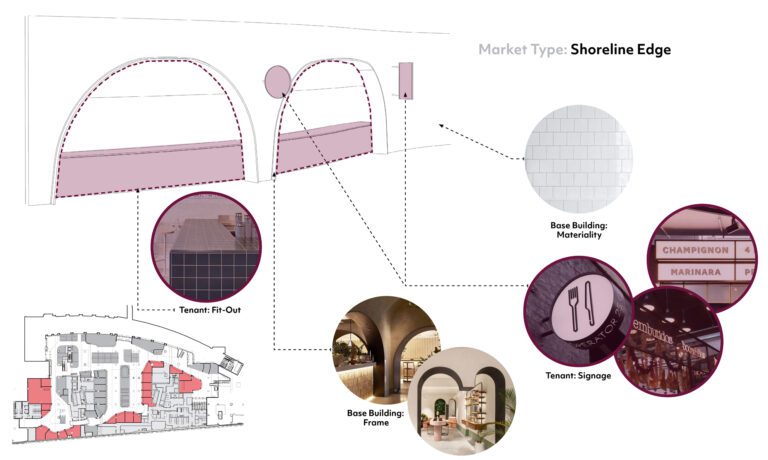
The ‘Shoreline Edge’ is a repeating glazed and matt brick bay whose undulating shape emulates the nearby lake edge and the long-lost historic Lake Iroquois that brushes the site of the market. These stalls are defined by robust arches with solidity of textured masonry.

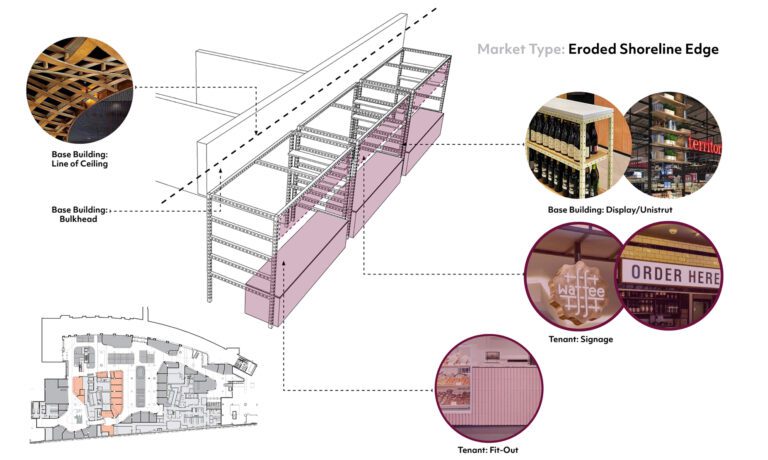
In contrast, the ‘Eroded Shoreline’ is a repeating bay of stalls with Unistrut frames that open site lines and create a porosity to the rest of the market.

The ‘Island’ hugs the northwest entry escalator. It is more open in nature than the “Eroded Shoreline’ and uses Unistrut to define tenant leasing area while providing an opportunity to populate the space with signage and product.
‘Rafts’ are in the centre of the marketplace and are more open and flexible in nature. Unistrut as a dividing wall is the only base building intervention, the rest or the stall being inhabited by the tenant. These stalls are low and invoke a more traditional market feel.
Quick Service Restaurants are large anchor tenants that require seating and kitchen space. The leasable area is defined while allowing large openings for a distinct aesthetic. Seating zones are sprinkled throughout – each relating to the corresponding, adjacent market stall typologies.

Wellington Market’s architecture blends industrial chic and European inspirations, creating an open and inviting atmosphere. Varied ceilings, exposed ductwork, and sturdy concrete pillars quietly frame the expansive market floor, while curved archways and tiled surfaces infuse a sense of European marketplace tradition into the modern setting.
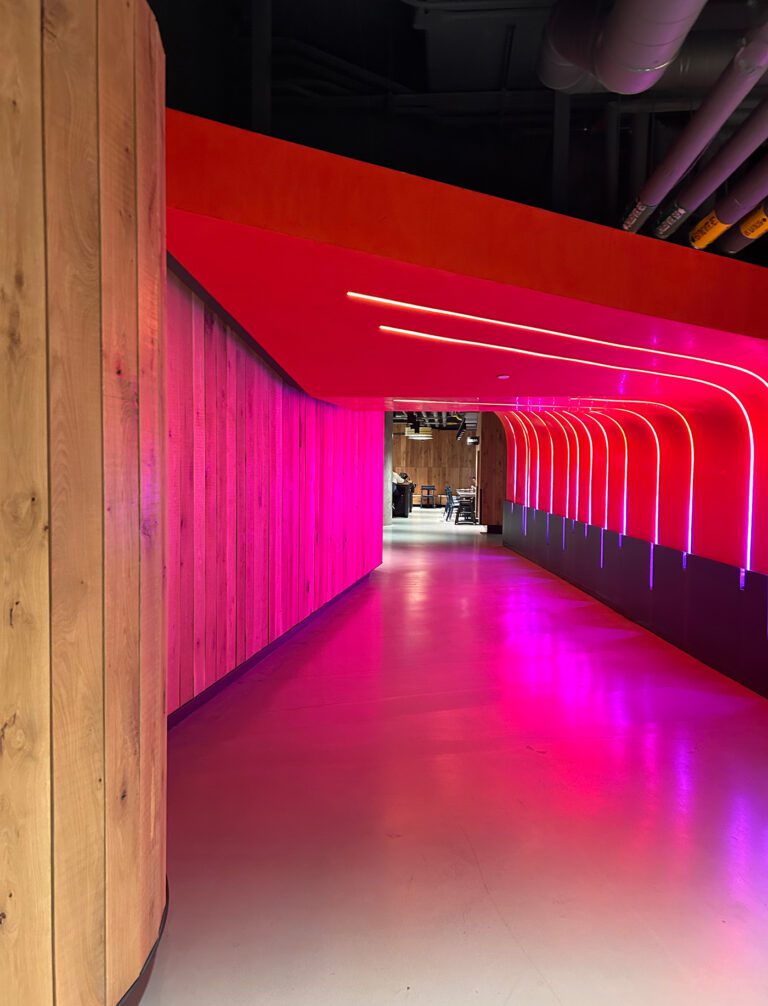
The architecture is introduced at the two escalator lobbies where the reclaimed, Douglas Fir ceilings are launched punctuated by dramatic lighting and circular ‘ripples’ of terrazzo flooring and anchored by rich glazed tile that leads down to the main hall.
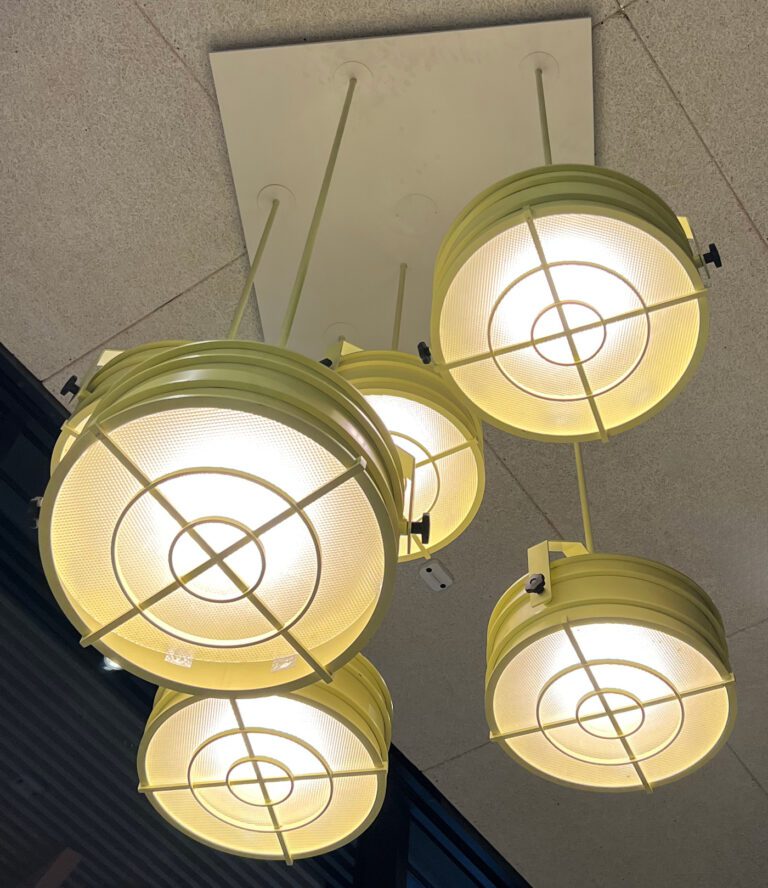
Critical to this objective is the embedded character of the long-lost industrial heritage that used to occupy this part of the city in the form of abstracted piers, docks, rafts, steel frames, barrel drum lights and islands. Together, these poetic elements transport the customer from the basement to the waterfront.

The ‘Hybrid Market’ depends on striking a perfect balance between traditional, chaotic open market and the more strictly regimented modern day food hall. Creatively achieving accessibility for all, while fashioning a dynamic, intoxicating space of fast and slow food, gathering, meeting and browsing was a challenge we embraced. Our solution was inventing a range of Market Types, that were curated along a strong spine and around anchor elements. Each typology is designed with unique character and materiality to frame bays of leasable space that remain strong and unwavering regardless of the interchanging tenants.
Wellington Market is designed to be Toronto’s go-to location for market fresh and artisan food, culinary exploration, and experiences – a vibrant, ever-changing landscape of food, retail, and community gathering that adapts to evolving vendor needs while preserving a cohesive identity in joyful, curated chaos.
Wellington Market is a GOLD winner in the 2025 Shop! Design Awards. Read more here.
Project Facts
-
Client
RioCan and Allied Properties REIT
-
Location
Toronto, Ontario
-
Size
70,000 sq. ft.
-
Status
Complete
-
Sub-Consultant Team
Structural — RJC Engineers
Mechanical — TMP (The Mitchell Partnership Inc.)
Electrical — Mulvey & Banani International Inc.
Code — LRI Engineering Inc.
-
General Contractor
Torque Builders
-
Photography
Fareen Karim
RioCan
Paul Reid